Dear New Zealand
Dear New Zealand,
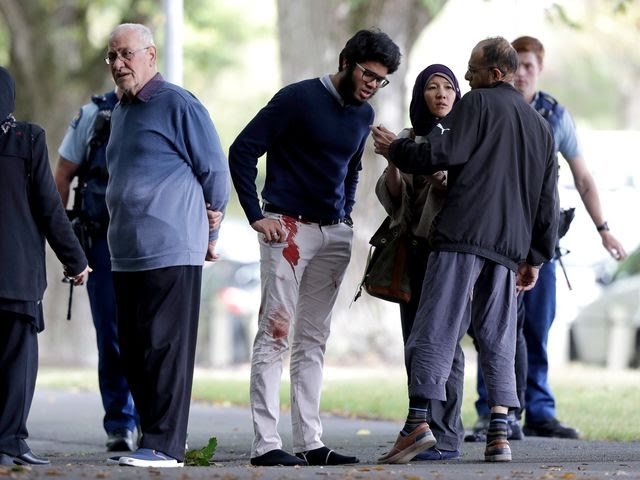
Since I woke up this morning, my heart has been breaking into a thousand pieces for what you are enduring. My mother is from Christchurch and I have watched Facebook over the hours as uncles and cousins and loved ones marked themselves “safe”. I have seen the horror on your faces, your grief, and your shock and I want you to know that my thoughts and prayers are a living thing and I am breathing them into the world. I hope they find you soon.
What I want to say next I say not as a loving cousin who grieves as only a family member can grieve, but as a sister who has been where you are now. You are a community that has suffered the trauma of hate and you have the blood and the bones and the wounded flesh to prove it. We are part of a small but growing family of communities thrust onto the world stage not because of all the things we love about our towns, but because of hate and terror and graphic, unimaginable rage.
Two and a half years ago I was living in Charlottesville, Virginia and was present at every event that long hot summer of 2016 when white supremacists made several visits, culminating in the tragic death by terror of Heather Hyer. I, too, have seen the blood and bone of a terrorist attack. I, too, have lived in a community that had to cope in the days and weeks that followed.
You will struggle to make sense of it. For many days time will alter and you will feel brittle. You will feel rage and anger at the bastards who did this. You will look at each other and say, “This is not us.”
And you will be wrong.
This is you. You have to find a way to own this if you are ever to prevent it from happening again. As comforting as it will be to say that hate has no place in Christchurch, you must be strong enough to open your eyes and your ears and your hearts to the reality that it does.
I know, I know, you think I do not understand New Zealand. My mother, your daughter, told me as much today. But I am a white woman, and like many white people in Charlottesville (and the world over), I said these same things in the wake of the Nazi attack in my town. So many of us said some iteration of the “this is not us” theme. And I believed it – oh, God, how I believed it!
When I protested that Charlottesville was a progressive, welcoming town, many friends of color said, “Sister, come, take a walk with me, and I will show you otherwise.”
I started listening, not to my echo chamber of middle class white Charlottesvillians, but to our communities of color, to our immigrants, to our refugees. And I heard a different story, one that shocked and shamed me. They told us of great acts of discrimination and small but daily hatreds that were like a thousand tiny cuts. For many, Charlottesville was not a sleepy little college town where everyone knows everyone and the streets are safe, even at night.
Rather, it was a place that protected white privilege. It was a place that allowed white people the dignity of not seeing or feeling the wounds that our culture inflicts on others every minute of every day – inequalities of education, wages, criminal justice, access to resources, daily kindnesses.
That was a side if Charlottesville I didn’t see; it was a side I didn’t want to acknowledge.
And then the Nazis came and Heather was killed and I learned a hard brutal lesson: we can say it is not us, but these young men who came with their manifestos and weapons and intention to break things did not come from communities of color, but from white neighborhoods like mine.
My husband once remarked that he could confront them – and he did, many times – because he knew them intimately. Not these ones in particular (my husband is English, not American), but he knows their kin because they exist in poor, working class white neighborhoods in the UK. And though I didn’t want to admit it, they also exist in the middle class neighborhoods where I grew up.
I am so sorry, New Zealand. I love you so much. And I know how heavy your burdens are and that the journey is far from over.
Trust me when I say the only way to put them down is to acknowledge their existence.
You think hate has come to your town – from Australia, from America, but definitely from away.
That may be true on a physical level. But you are also like every other town dominated by whiteness – a town that turns a blind eye to the every day hatreds that are inflicted on many of your citizens.
Other places may have planted the seeds, but yours is the soil in which those seeds grew and bore fruit.
So yes, this is you. You are one of us, a member of a community that has seen the darkest side of humanity. Like us, you have many years of collective and individual work ahead.
Let the beginning of that journey begin with a full accounting. Expose your shadows to the light. Listen to those whose voices are not often heard.
And know that we are with you in spirit, every step of the way.
With much love and peace,
Your sister,
Katie
 kateycarston.com