Like a lot of folks in Charlottesville, I awoke early on Friday with a mild sense of dread. At the end of a long, hot summer, the weekend we had all been fearing was finally here.
We were like a community waiting for a hurricane – we’d brought in all the supplies we could think of, boarded up the windows, and were hoping for a Category 1.
But we all knew this was tracking at a Category 5.
This was not our first encounter with these people. They first came in May and crashed our Cultural Festival, which was also held in Emancipation Park. Then they came back on the 8th of July and had another little rally.
But these were just the warmups, the test runs to see how municipal leaders and the community would react. On those occasions, we didn’t react strongly enough.
In preparation for Saturday, local organizations and activists held various training events, everything from street medic preparation to non-violent action. For those who wanted to participate but perhaps not risk life and limb, there was a need for trained legal observers and, believe it or not, folks on standby to go to the city lockup to post bail for anyone who got arrested.
Yes, we were expecting a shit show. And it’s a good thing we did, too, because this community was ready.
Local clergy put out a “Clergy Call” and Rev. Traci Blackmon, Dr. Cornell West, and Brian McClaren (among many others) all showed up. And that’s what kept me sane on Friday – the promise of spiritual guidance from some of the best in the business.
And frankly, I thought we’d be safe at church.
God, how naive.
While sitting in a packed church across from the UVA grounds, Unite The Right were descending with tiki torches, chanting “Blood and Soil!” and “Jew will not replace us'”. 
After the most inspiring of services that featured texts from the Quran and Hebrew songs, as we were slowly walking out to a rousing chorus of “We who believe in freedom can not rest”, we were told to please take our seats. The police were concerned for our safety.
It wasn’t until I got home that I would fully understand why.
When we were finally allowed to leave, we we’re asked to stay in groups for our own protection. Lee and I walked with a small group for a couple of blocks to our car. Someone saw a young woman wearing a hijab walking alone – they asked her to be careful, the Nazis we’re up to something on grounds, and invited her to walk with us. Thankfully her husband was there in a parked car, and we walked on together, discussing our respective neighborhoods and the start of school in a few weeks.
Normal human conversations on a surreal Friday night.
Saturday morning dawned and my daily prayer of “This is the day the Lord has made; let us rejoice and be glad of it” felt stiff on my lips. I got up, put the kettle on, then began a few hours of nail biting and hand wringing.
What the hell were we supposed to do today? As a white person, this felt like a hot mess of our own creation and I had some responsibility to help clean up. Unlike events in Ferguson or Baltimore, this was not an outcry in the face of injustice. This was planned. By other white people. By other people who believe in racial superiority, fascism, and legalized rape (these Neanderthals think a woman’s only role in life is to procreate).
But didn’t I, as someone who has benefited from white privilege, have a responsibility to step up and be counted? To look this ugliness in the eye and say that enough was enough? Shouldn’t it be white people sacrificing our bodies for equality and justice? Why do we always expect the poor, people of color, and the marginalized to do all of the heavy lifting?
I have to admit, I was not originally in favour of a counter protest. Like many white people, I wanted everyone to avoid Downtown – if a tree falls in a forest and nobody hears it, does it make a noise?
The other part of me wanted to be at UVA participating in the activities and workshops planned for the day, covering a range of topics from the history of Black people in Charlottesville to the rise of the Alt-right. In times of trouble, a good class discussion can really steady the nerves.
In the end, after we thought the event had been cancelled by the authorities and the Nazis sent away, Lee and I decided to head to a third park downtown (McGuffey), to be present for the art, music and non-violent resistance program of events.
We parked on South Street, two blocks from the Mall. There were few cars about and fewer people. Then, as we began walking toward the Mall, a group of counter protesters marched toward us. They seemed young, full of life, and relatively harmless and there wasn’t a Nazi in sight!
What an opportunity to stand in solidarity. To say we were there, to do the right thing without fear of getting pepper sprayed.
And we saw a lot people we know, other “normal” people. No harm in falling in line when the person in front of you is a vegetarian, right?
One block after we joined the march, a second group of counter protesters coming down a nother street intersected with ours. These were fellow counter protesters who, rumor had it, had gone to defend a low income housing community a block away. When it appeared that no Nazis were marching on Friendship Court, this second group retreated and joined ours.
For one short block, we all marched together, taking back our streets, arm in arm, almost festive in our mood – it felt celebratory. We the Citizens of Charlottesville had driven off the anti-semites and it felt good.
Not on our watch!
And then there was a noise and a surge of bodies that turned into a tidal wave as the crowd turned and fled from an unspeakable horror.
I jumped behind a concrete pillar to avoid getting trampled. Then it was over.
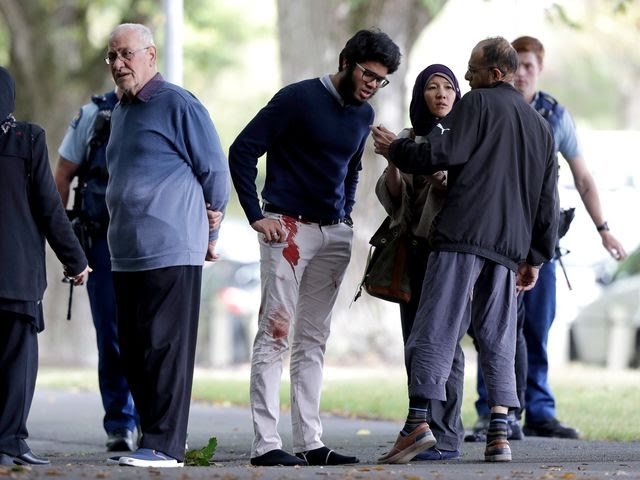
Within seconds the walking wounded began to emerge from the crowd. At first it was just people hyperventilating. Then it was skin abrasions. And then the first responders were there. Thank God. 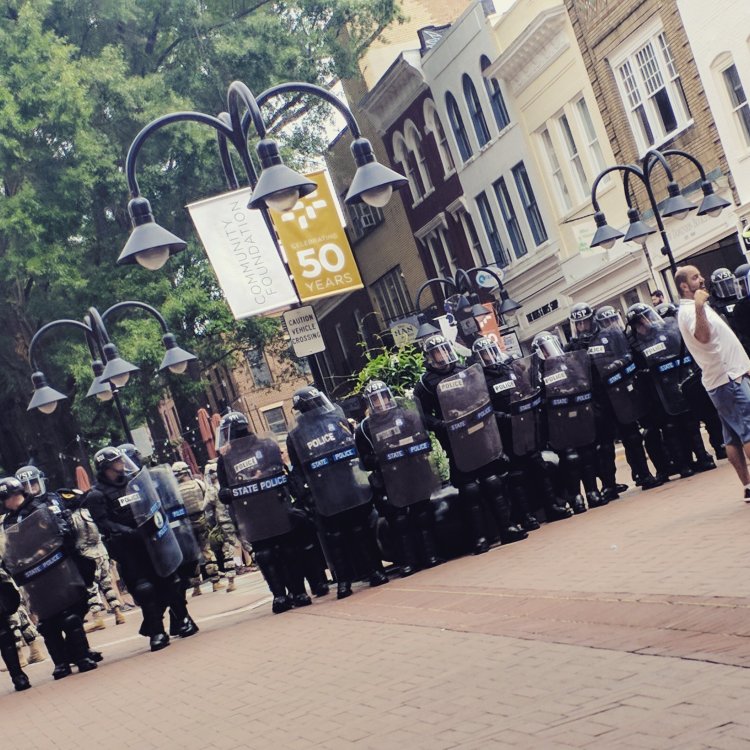 It felt like it was ambulance after ambulance, stretcher after stretcher. I saw ankles and other limbs swollen beyond all recognition, torn clothes, blood.
It was horrific. I didn’t know how horrific until a few hours later.
Sunday morning I went to church. Four pastors cried from the pulpit. Our local clergy had been so brilliant – right on the front lines, bearing witness and trying to hold a moral high ground while shielding counter-protestors and victims (literally, at Water Street they formed human shields to shelter the wounded).
The message on Friday night had been one of love and resistance, a call to spiritual arms. We must all become David and face down the Goliath of hate and racial superiority.
Friday has a symbolic meaning in the church. We were told to remember that after a terrible Friday, Sunday must come. Sunday, full of the promise of the Good News, that life is everlasting and that love can defeat even death.
And here we were, on Sunday, bloody and broken. And two troopers and one of our own were dead.
We did the only thing we knew we could do – we lifted our hearts to the Lord in songs of praise. Like the Who’s in Dr. Seuss’ tale of the Grinch Who Stole Christmas, the folks of this Wooville also came together in song.
I don’t know if it did me any good. Honestly, I’m still angry, still saddened, and still resentful that I have to find a way to love these enemies who came to this sweet little town with the express intention to start a race war.
I’m still struggling. It’s after midnight and my nerves are still jumpy. I fear the Nazis are still around, laying low until the state troopers pack up and leave so that they can jump us when we least expect it.
This is what terrorism feels like.
I kept my kids home all weekend because a crazy white supremacist crashed his car into a crowd of people. These white supremacists all proudly carry guns. What’s to stop them coming to our local park, just 2 miles from downtown, and trying to take out more of us?
Am I crazy to think this? I’ve read their websites. Their ideology is sick and twisted. They can and will do anything to anyone who stands against them.
I know I have to get past this. But I don’t think it will be easy. And I know that practicing my faith, a faith that calls me to extend love to all, even those who would do me and mine harm, just got a little harder.
I also know that this is a mess only white people can fix. I am very conscious that one of the markers of white privilege is a sense that this is “all about me” and that this matters because for one moment, it impacted my life. I can go back to my world and recover – people of color and other targeted groups cannot.
But in this case, we are the only ones who can dig out the plank of wood that is rammed into our eyes. I grew up with people who, though not white nationalists, certainly harbored many similar views about immigrants, Muslims, and people of color. We have to call them out at every church potluck, at every PTA meeting, at every high school basketball game.
We have to watch our own and make sure they aren’t being radicalized – because make no mistake, the people who came to Charlottesville are radical white supremacists, no different in many ways to the other radical terror groups like the IRA and ISIL.
When we stand by and let our sons, daughters, brothers and friends fall into ugly talk and radical ideology, we are complicit.
The Bible tells us that we are all one in Jesus, all part of the same body of Christ. When one part hurts, so do all the others.
So this is our challenge: how do we invite those who hate us to come, sit at our table, and hear the Good News, that on a glorious Sunday love triumphed over death and redemption is ours for the asking?
I’m still trying to figure that part out.
I remember moving to Charlottesville several years ago. I didn’t know anyone but my family and often felt alone and isolated. Sensing my need to connect, many people invited me to church.
If radicalization is the result of isolation and disconnection, maybe one first step we can take is to invite our haters to come and worship with us.
This is the time to hate the sin but love the sinner, and it sure as hell ain’t gonna be easy.
The picture I included here is of the Downtown Mall we all know and love, a place of family and community and joy. It helps if you know what we’re fighting for.
Keep us in your prayers. It helps, more than you know. 
And remember that we still have a lot of work to do. Until we can all look in the mirror and know without a doubt that we have removed every shred of anger, hate, and bitterness from our hearts, our work is not done.
Peace to you all.
 kateycarston.com